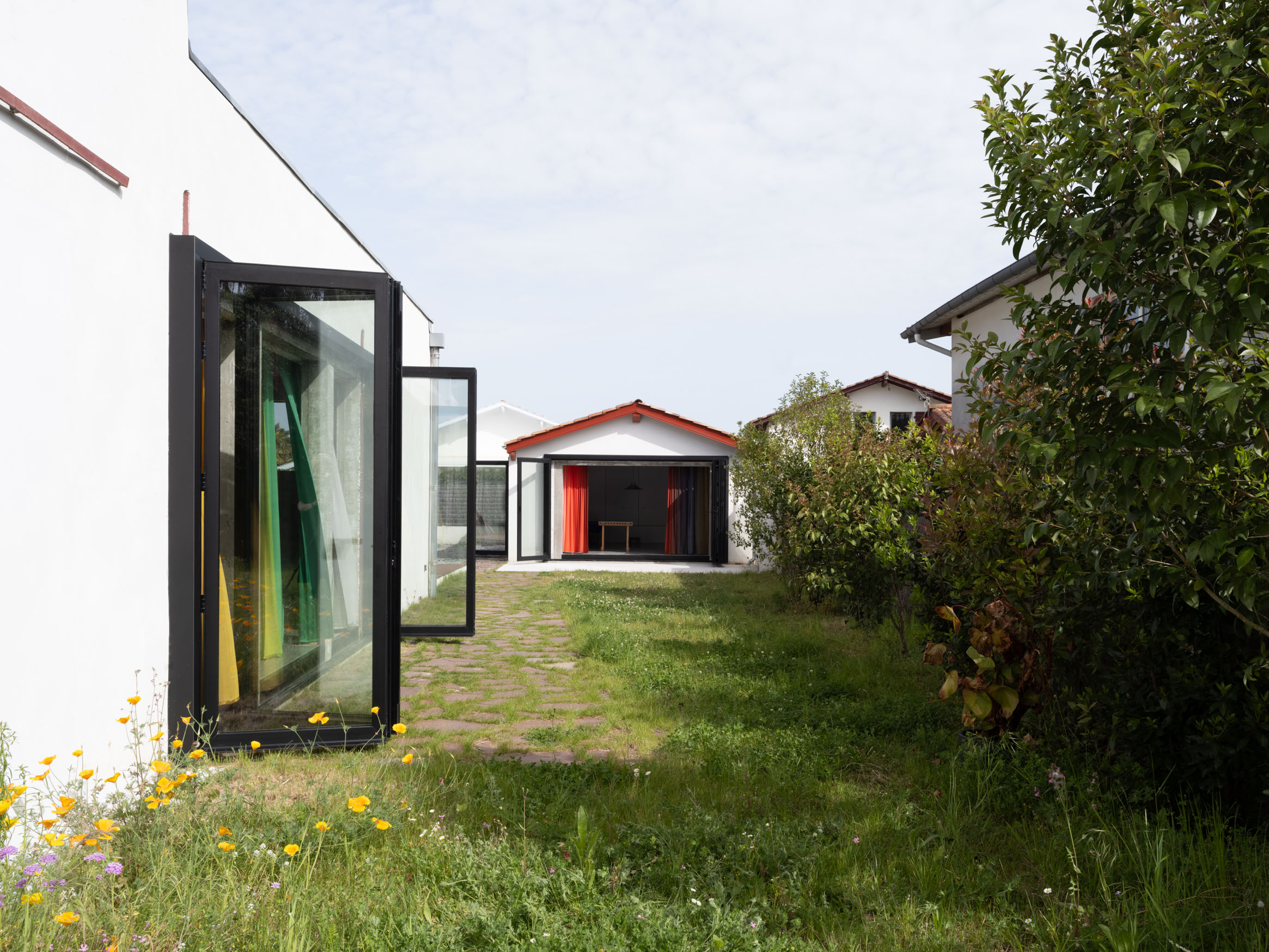
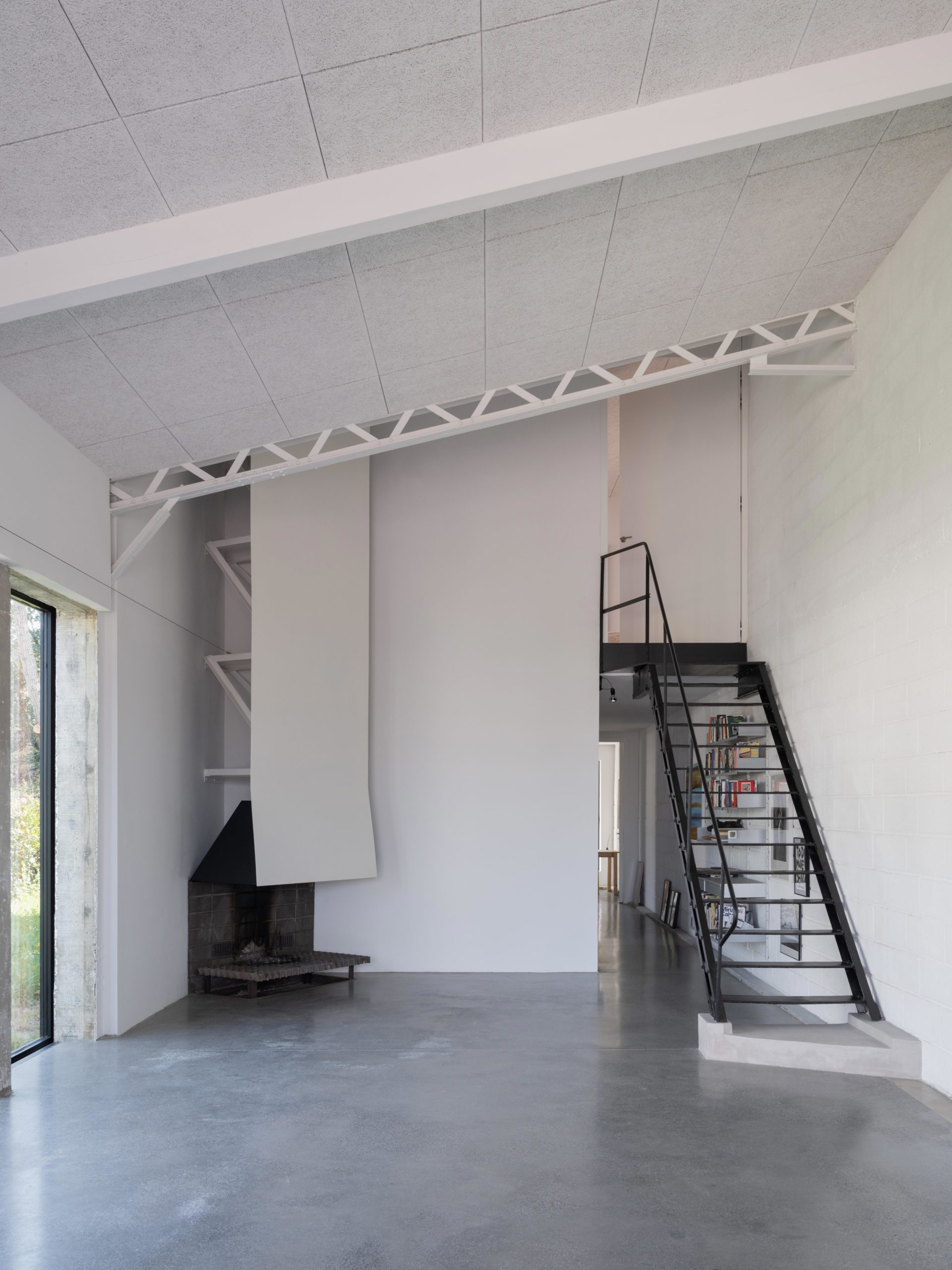
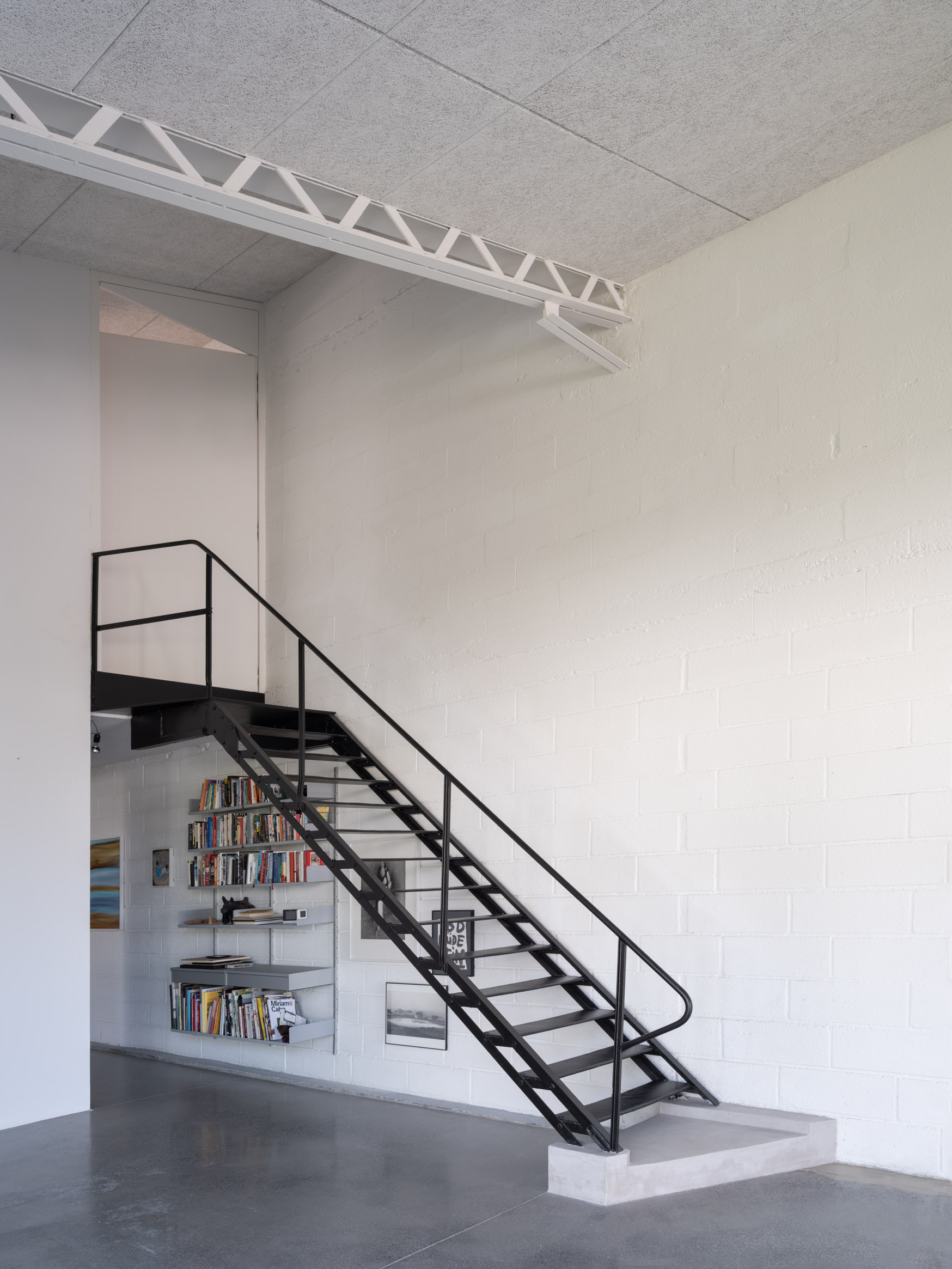
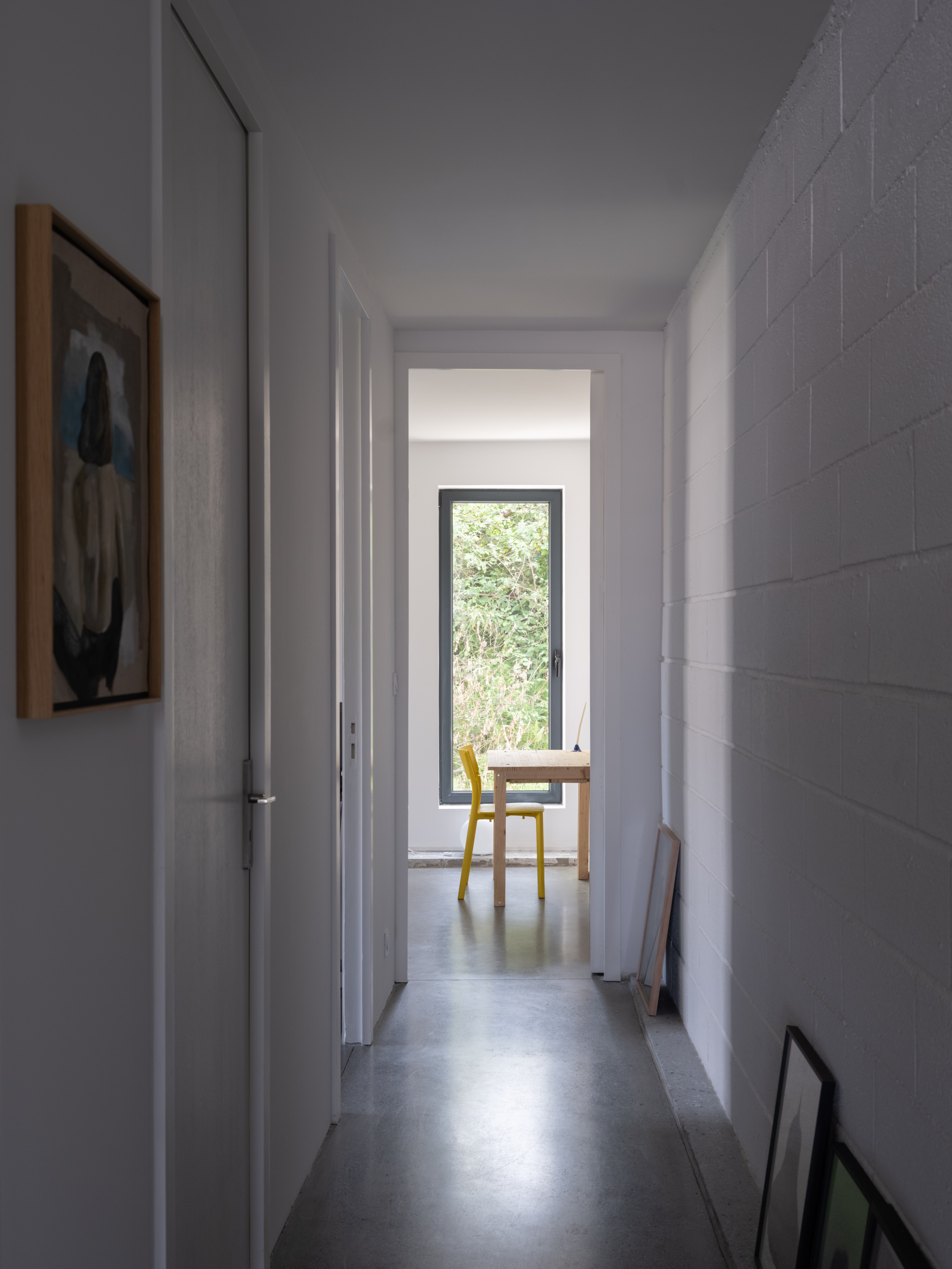
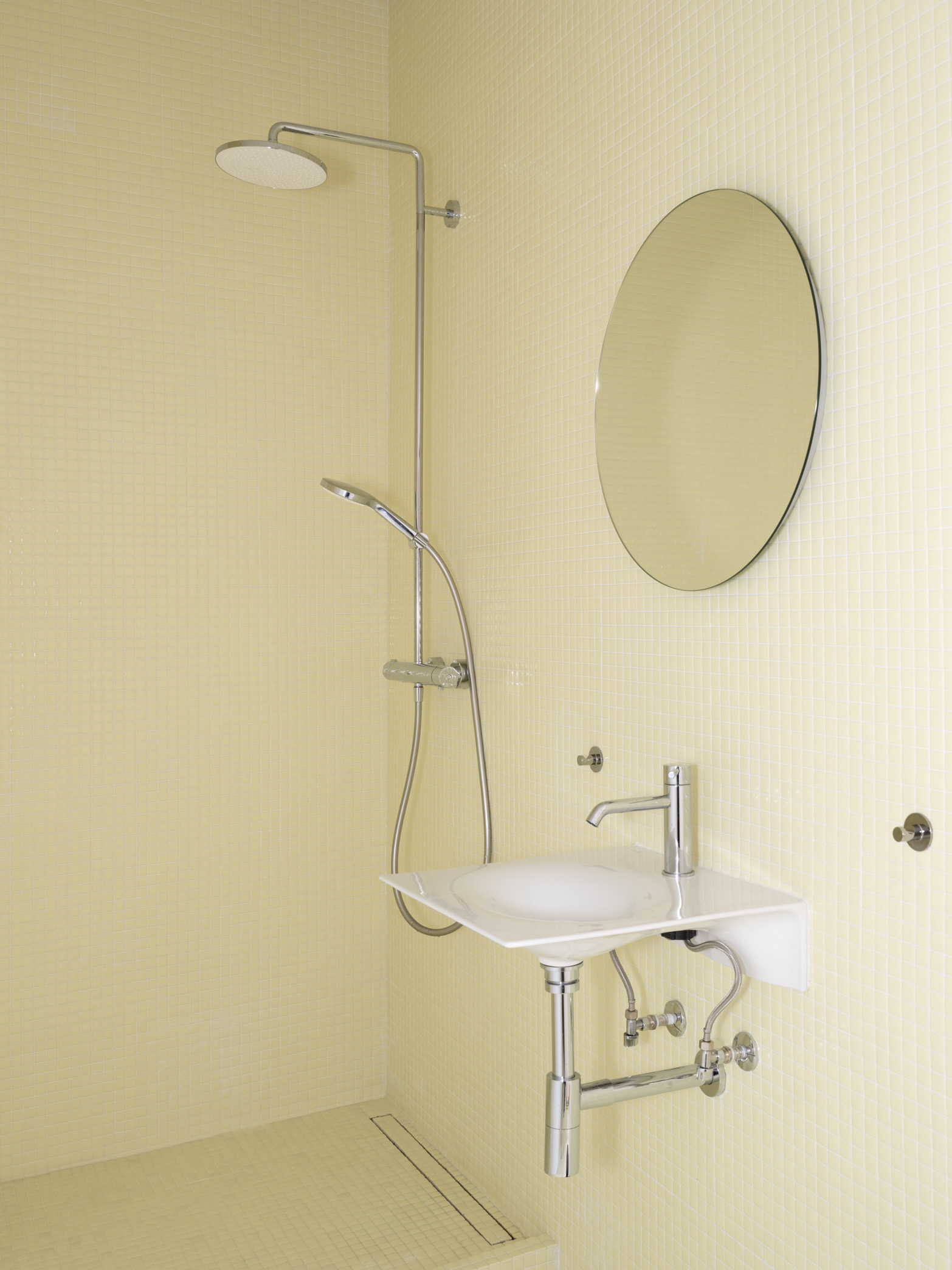
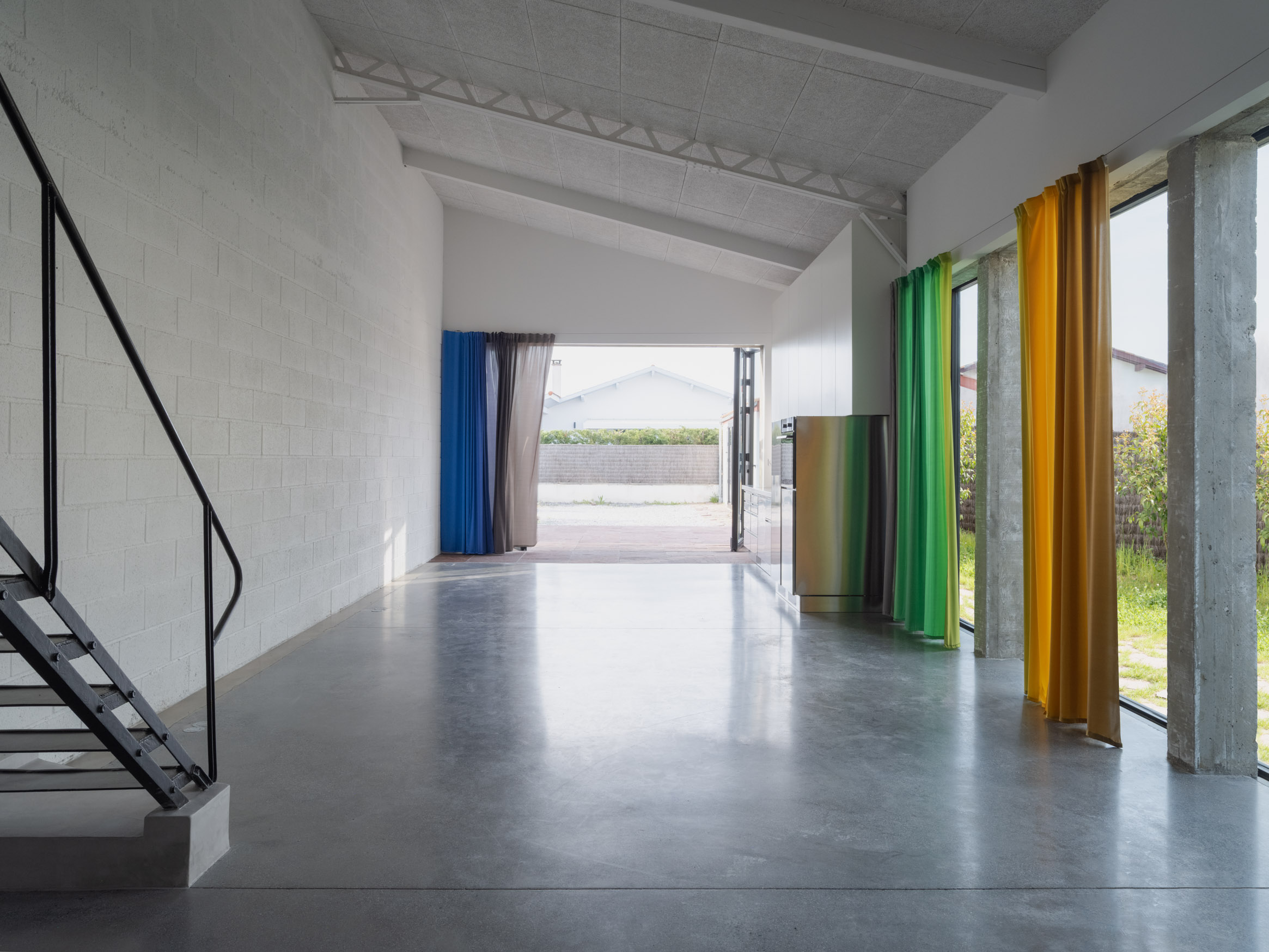
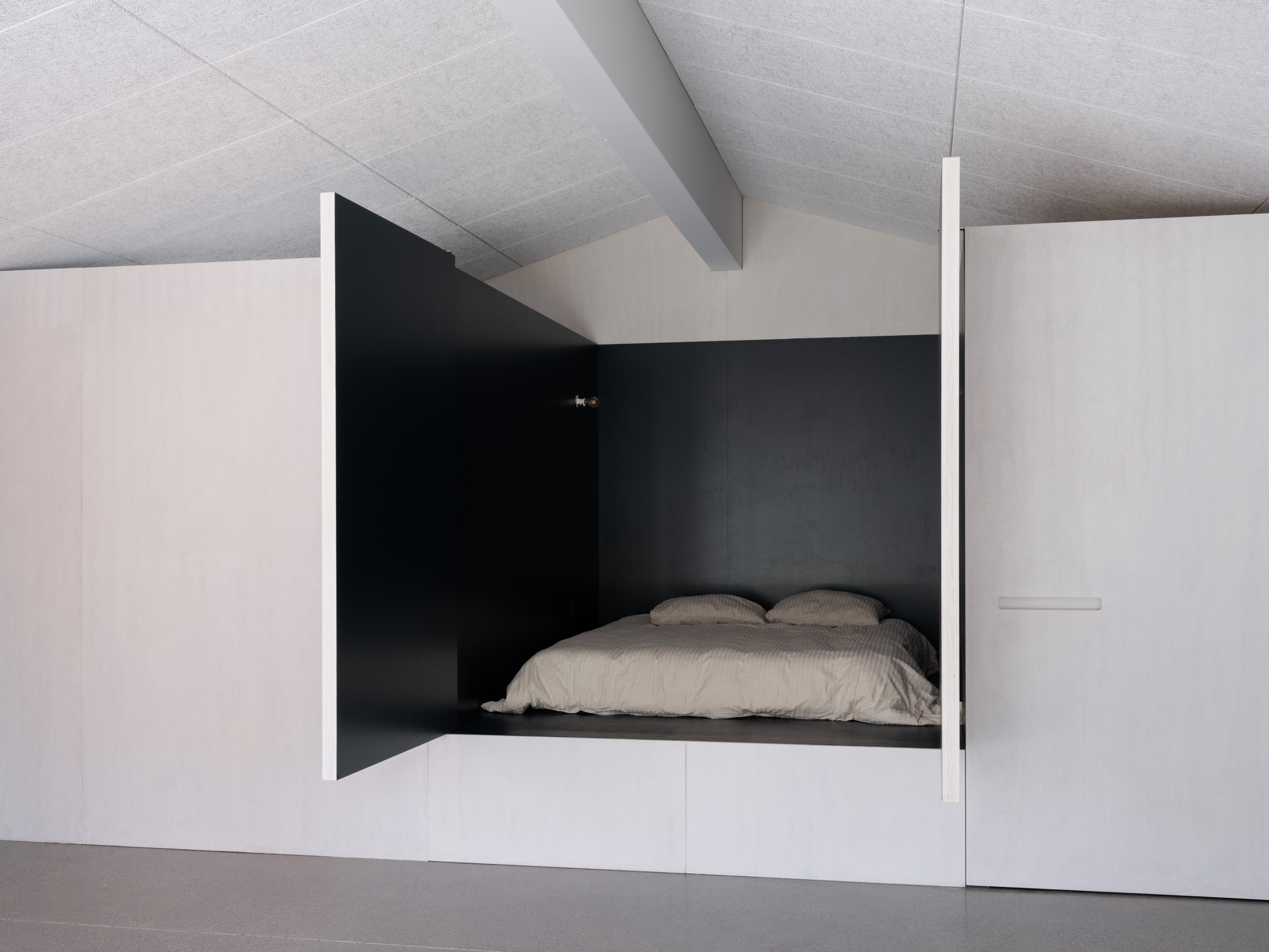
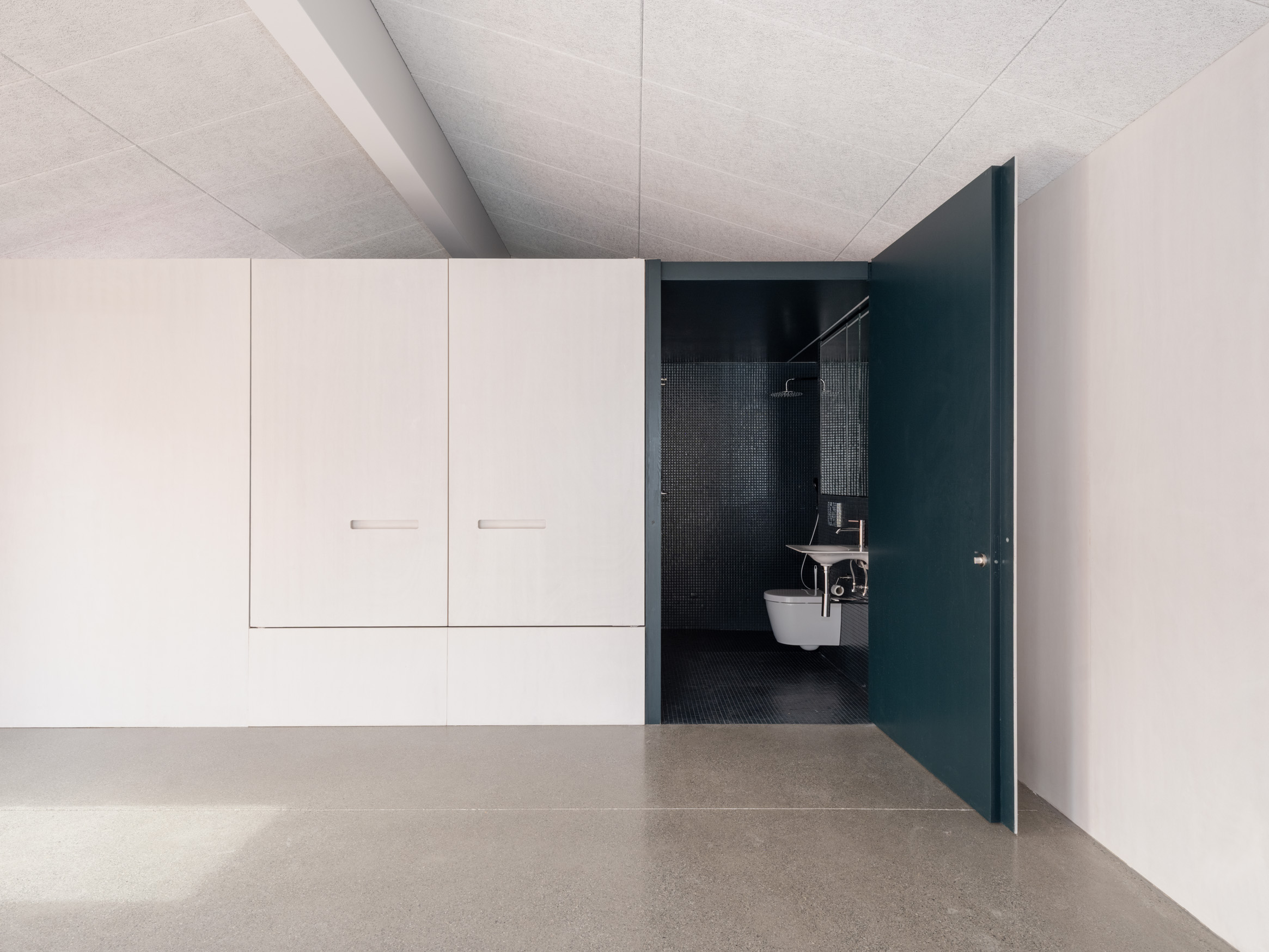
Twinhouse is the transformation of a former hangar and a covered parking structure originally built to shelter and store algae for the pharmaceutical industry. The building had already undergone a first domestic conversion. The project acts as a second life: not a correction, but an amplification.
Rather than replacing, the project almost obstinately exploits the modest elements built by its predecessors. The existing structures — sometimes approximate, often pragmatic — become the raw material of the project.
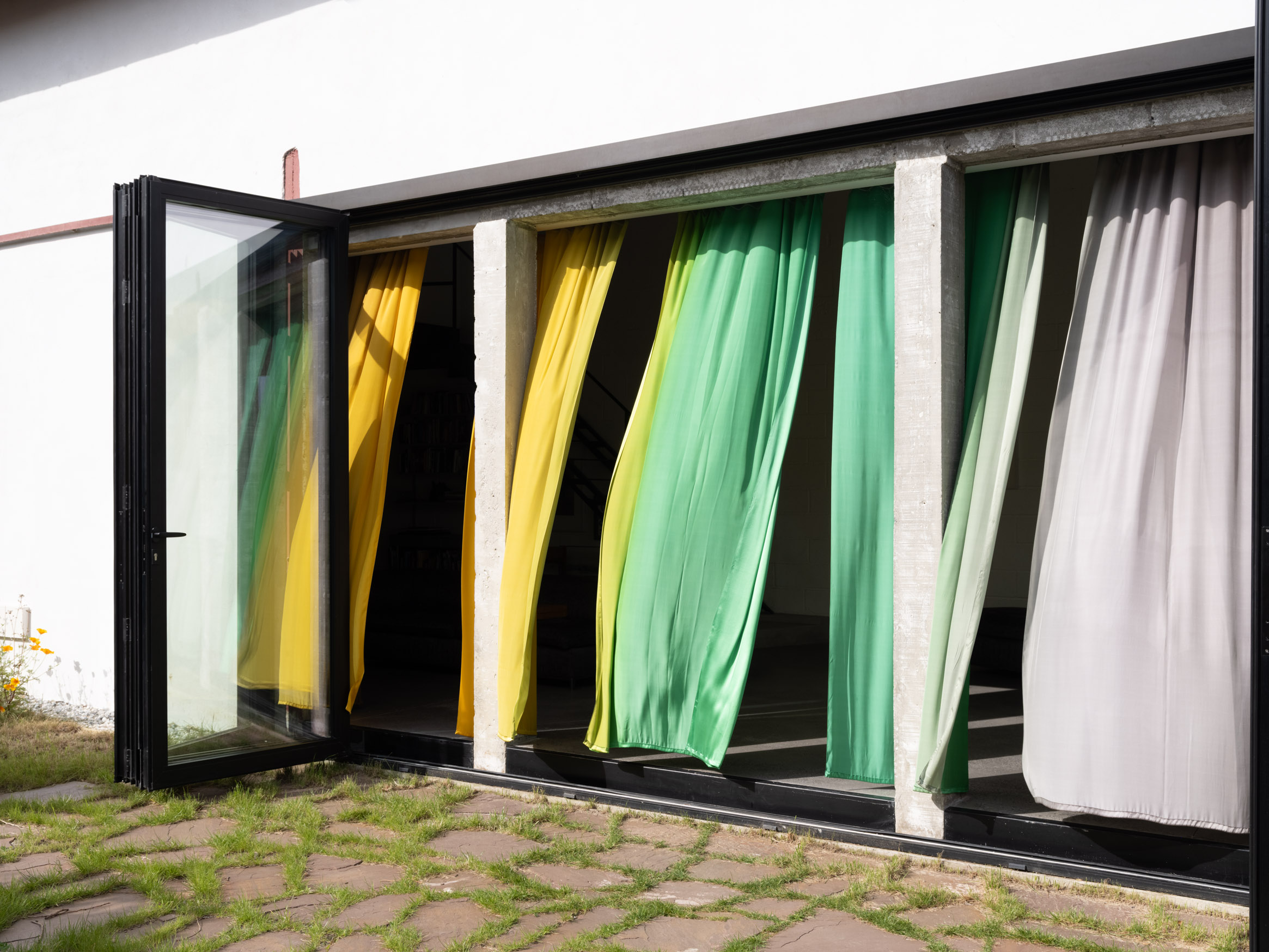
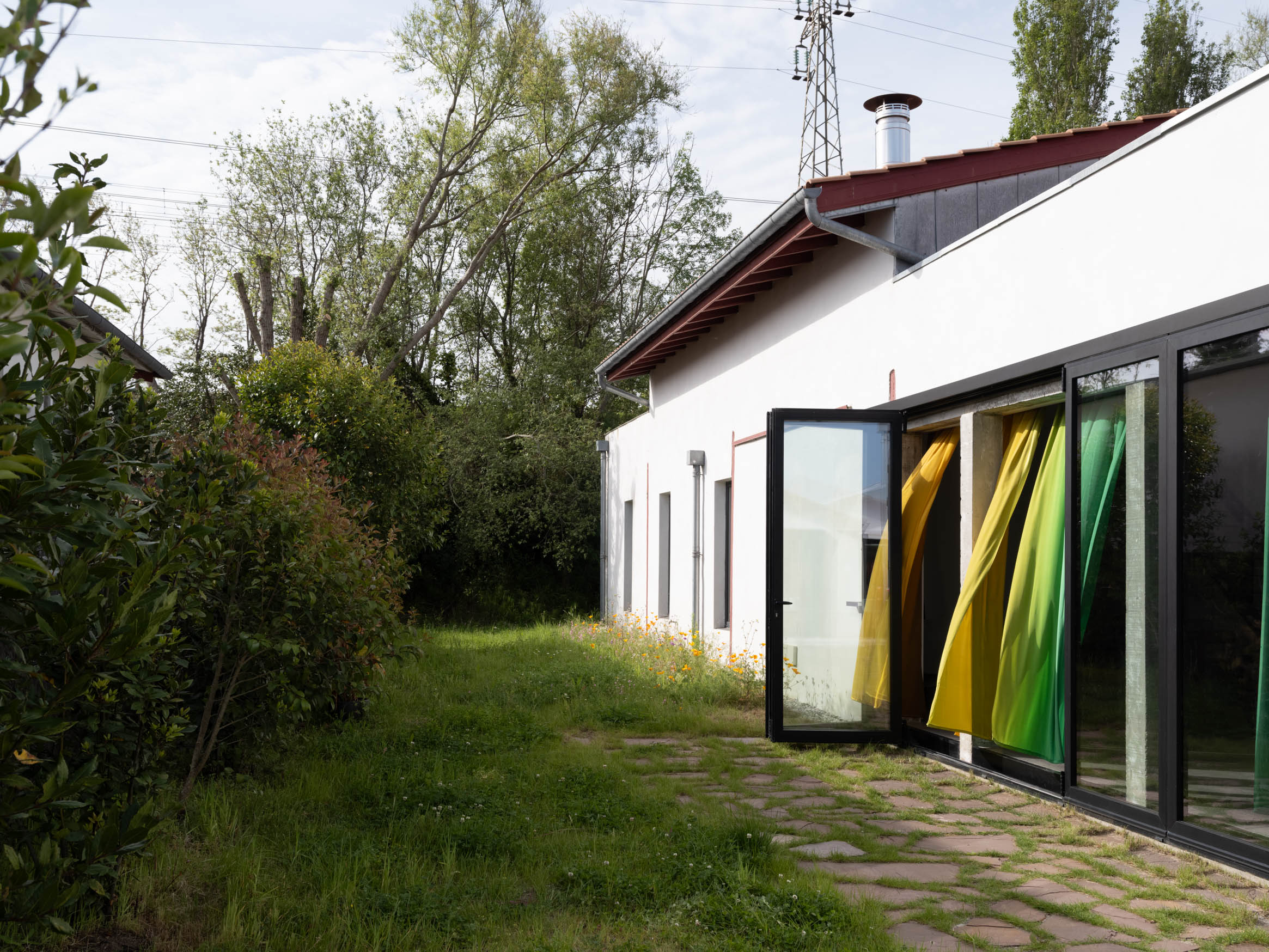
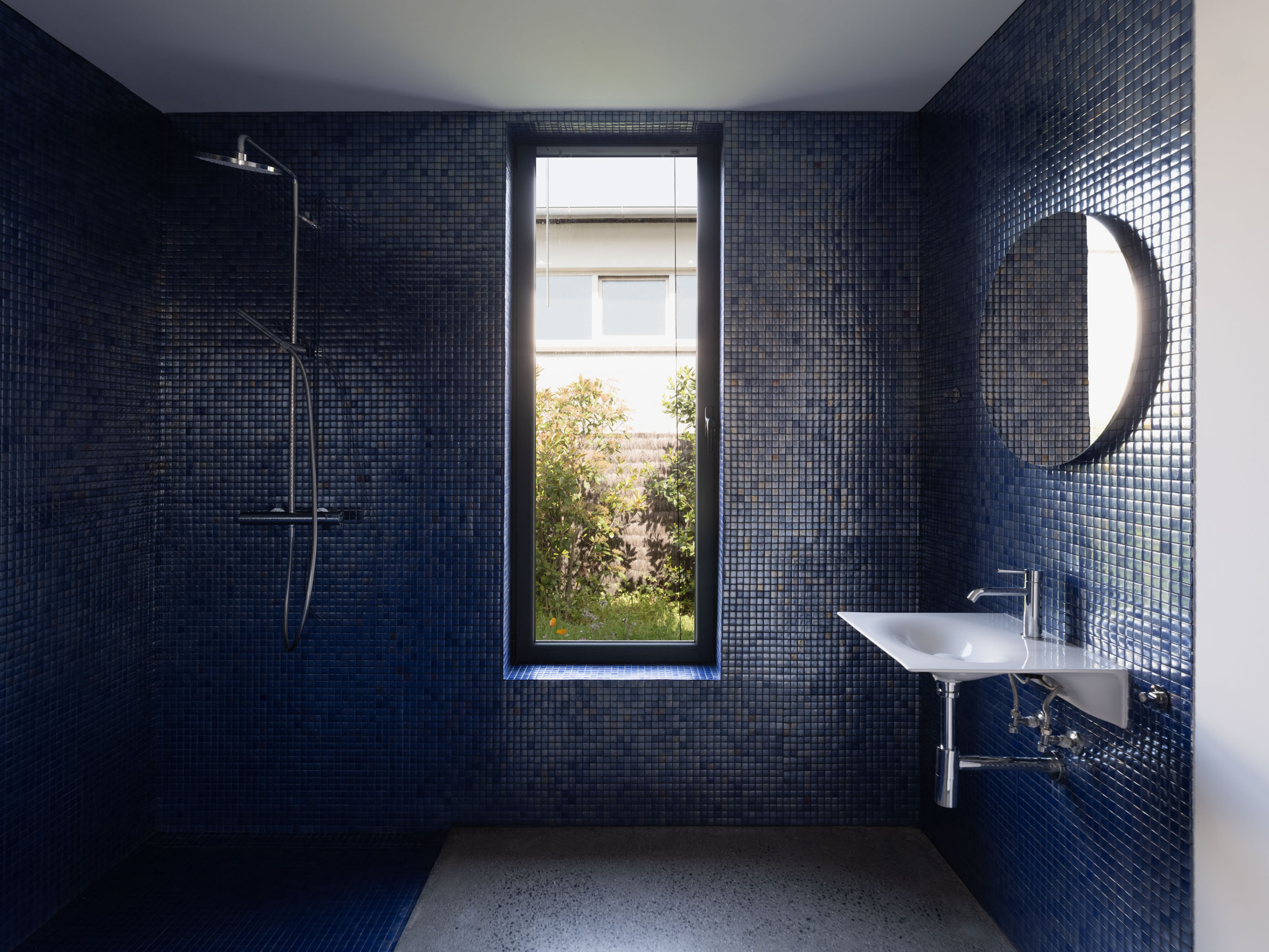
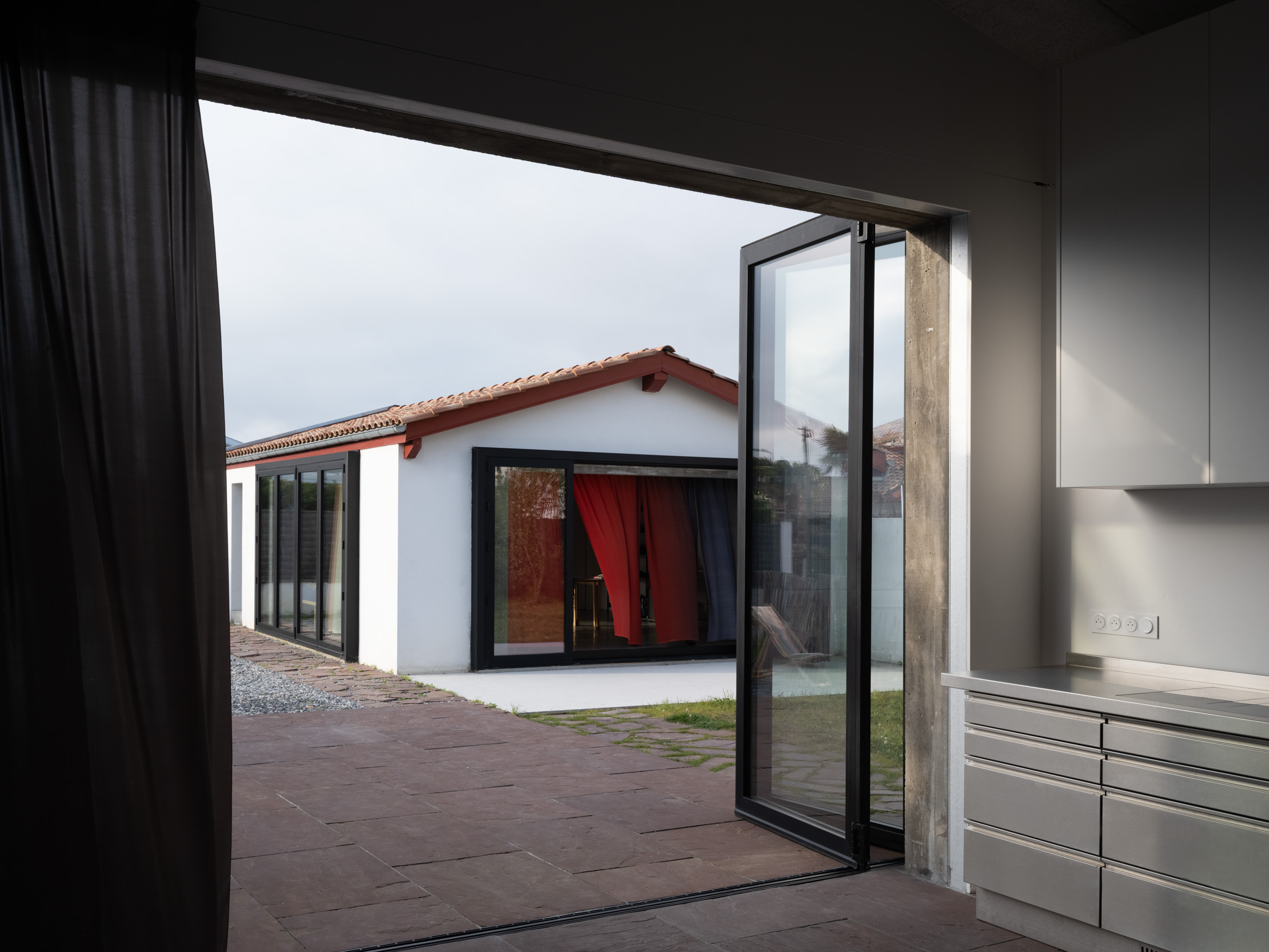
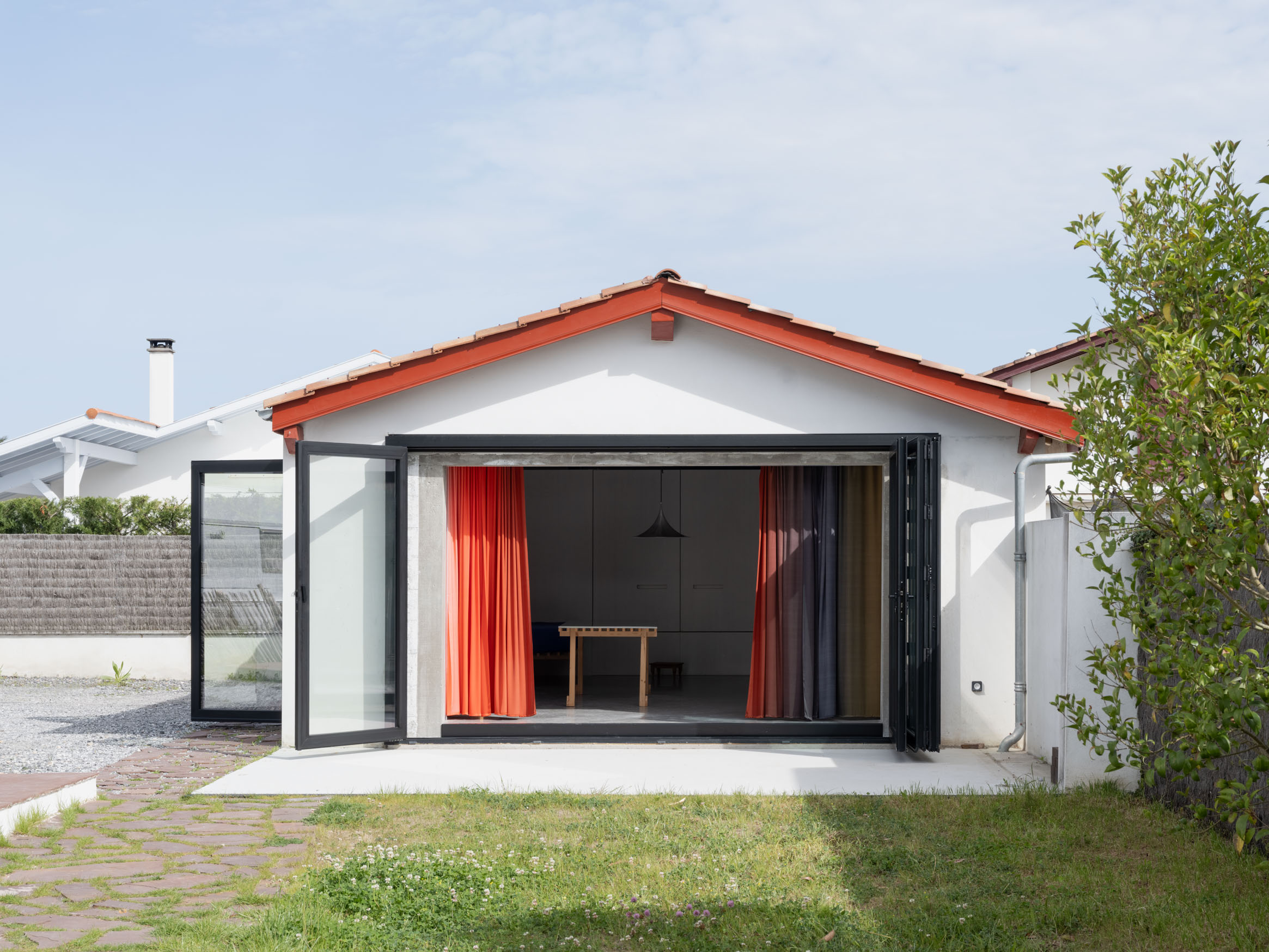
Four large bay windows, almost identical, are set onto the exterior walls. They are deliberately larger than the existing openings. This slight excess redefines the scale: the annex suddenly acquires the same presence as the main house.
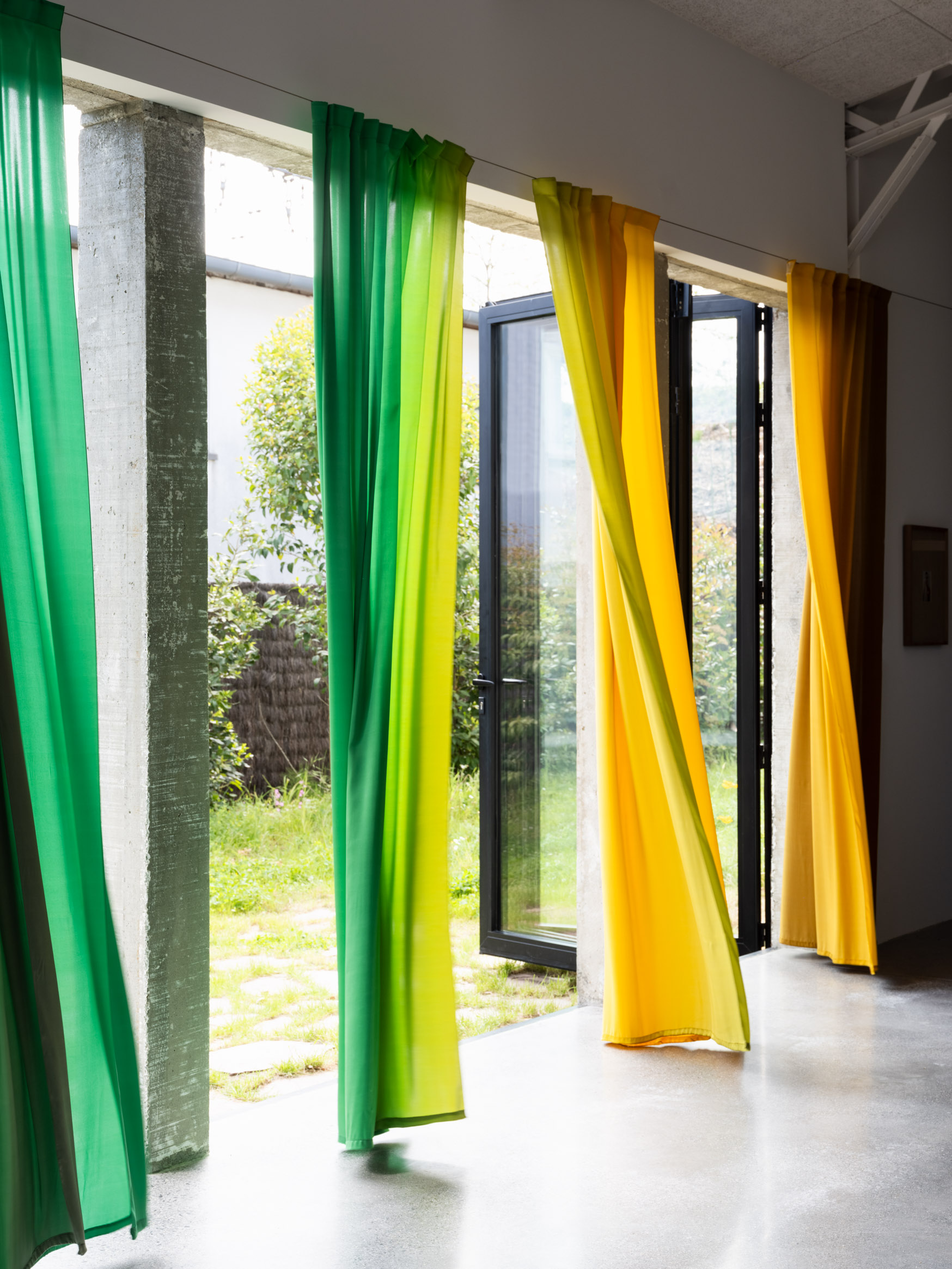
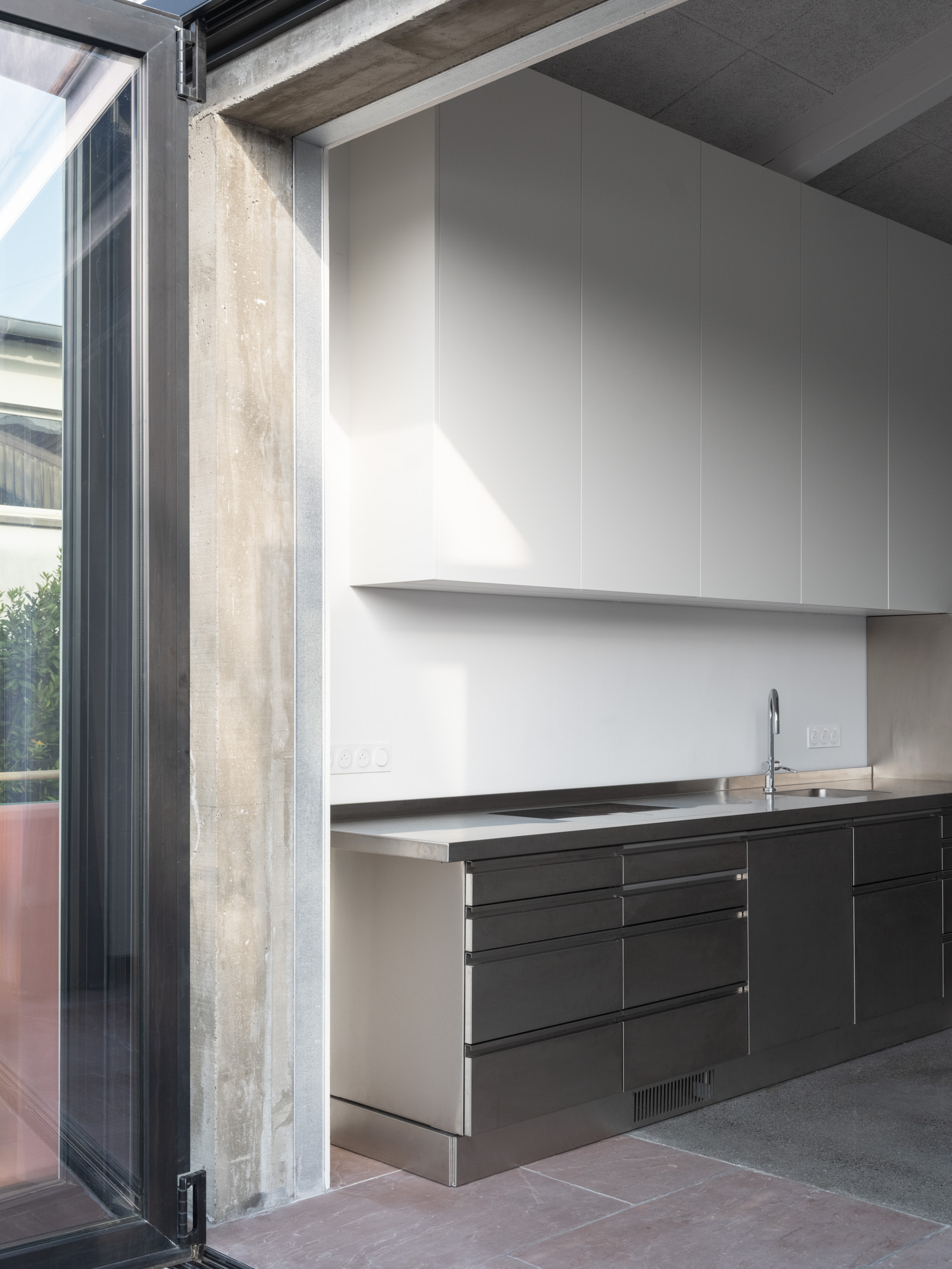
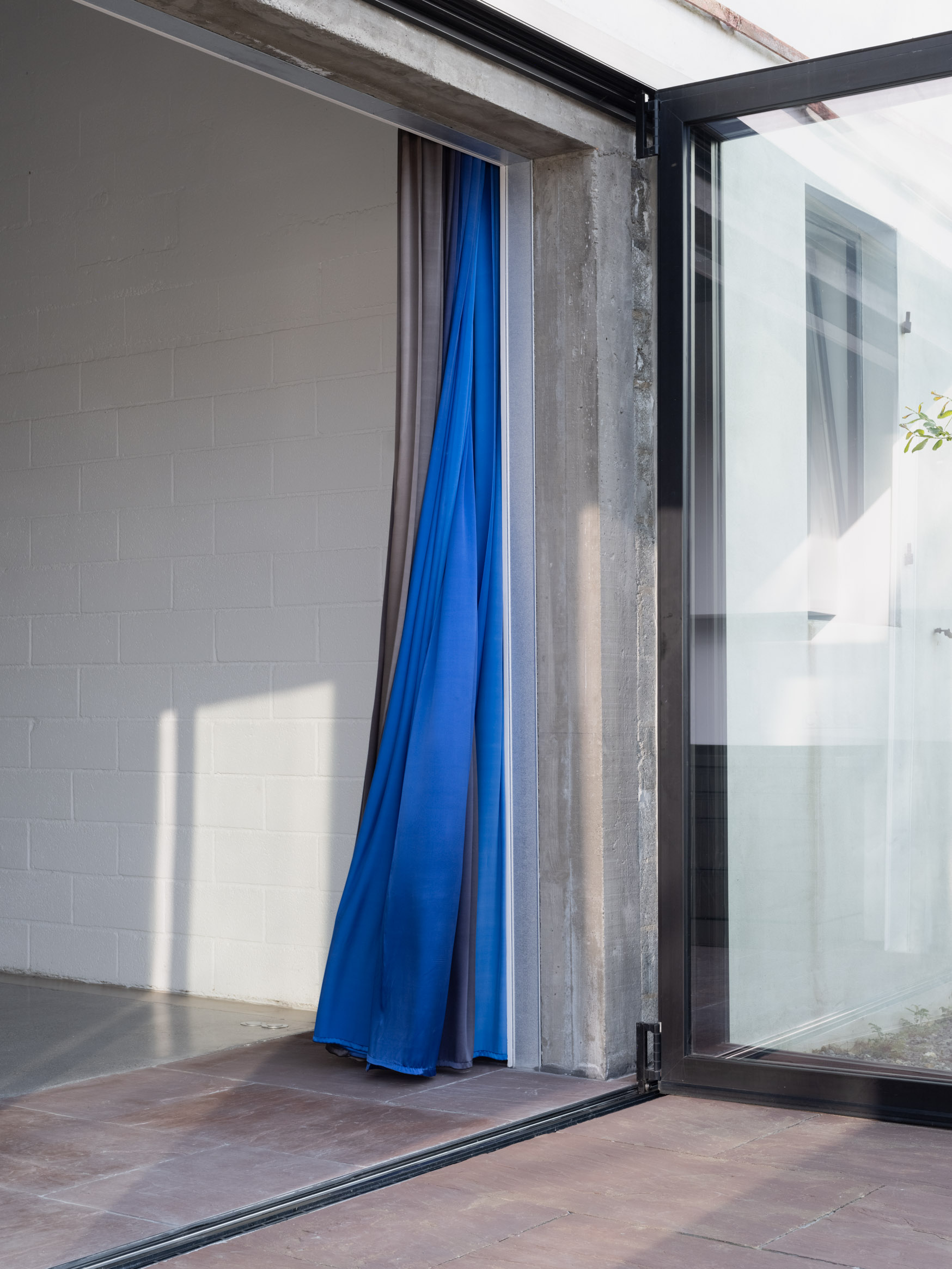
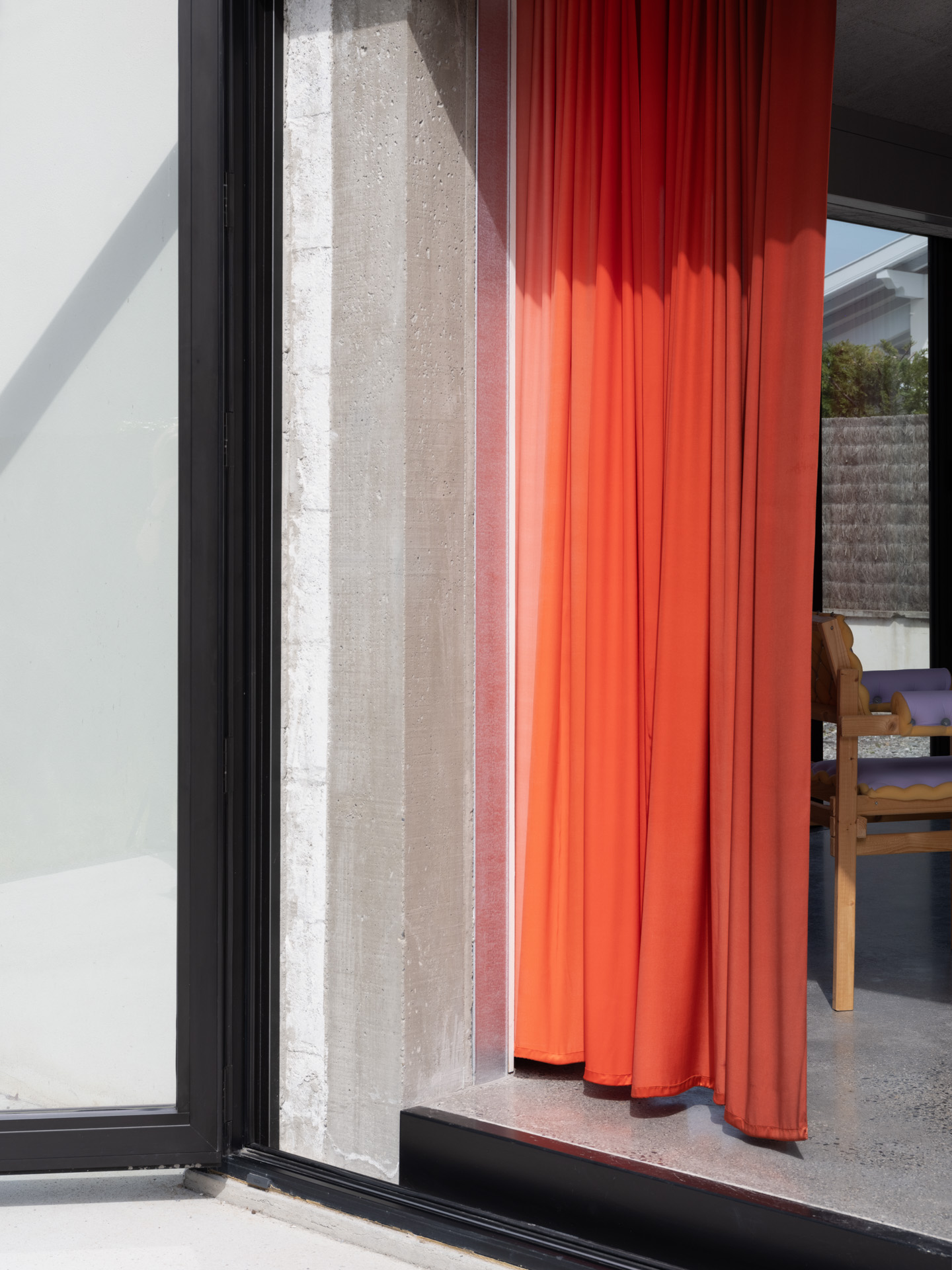
When the window elements are opened, they disappear entirely from the interior. The openings are no longer perceived as windows but as holes in the walls. The thickness of the wall becomes visible, almost archaeological. The cut is left raw: the concrete is bush-hammered and untreated. The walls close simply with the aluminium profiles that compose them.
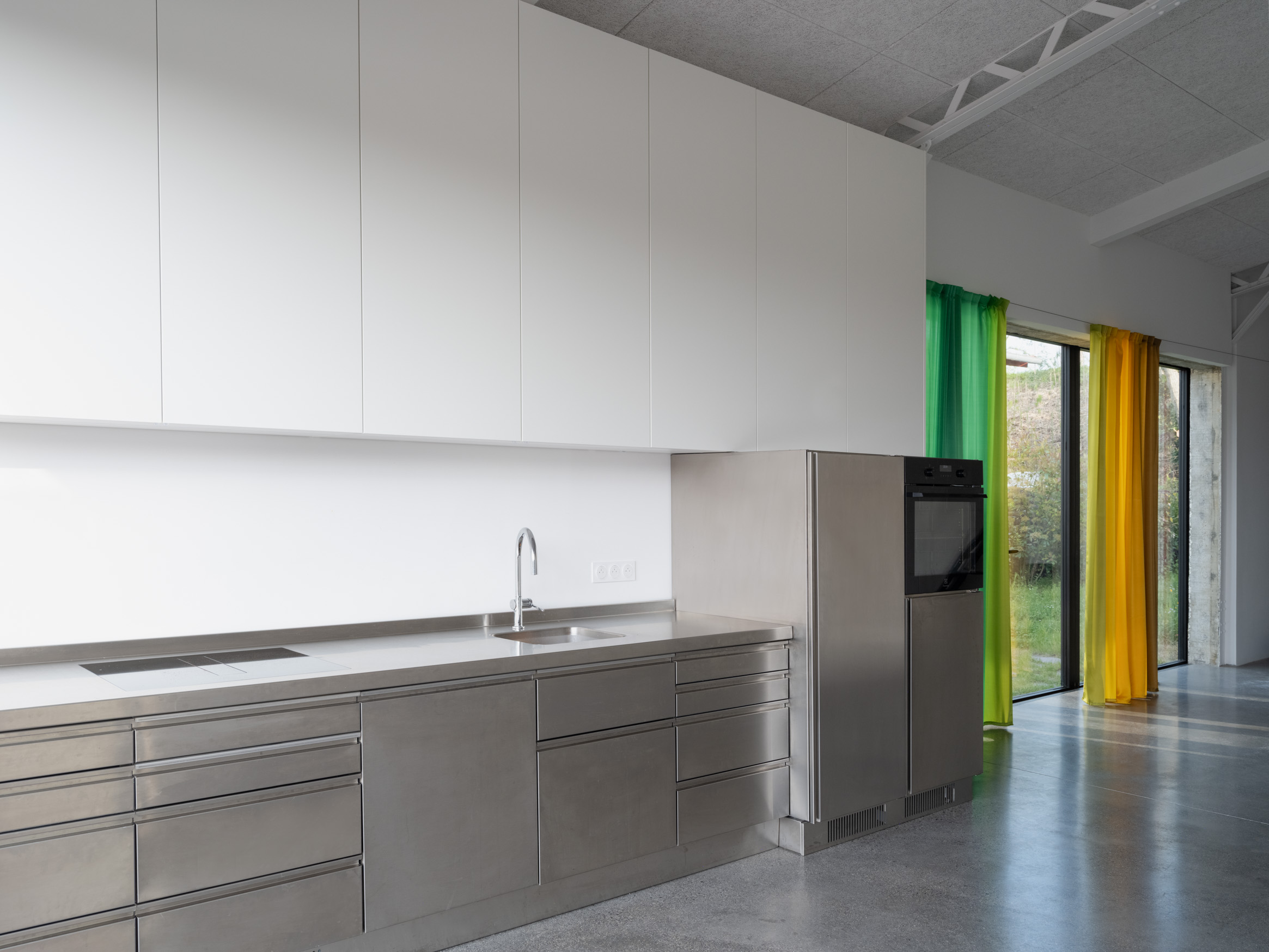
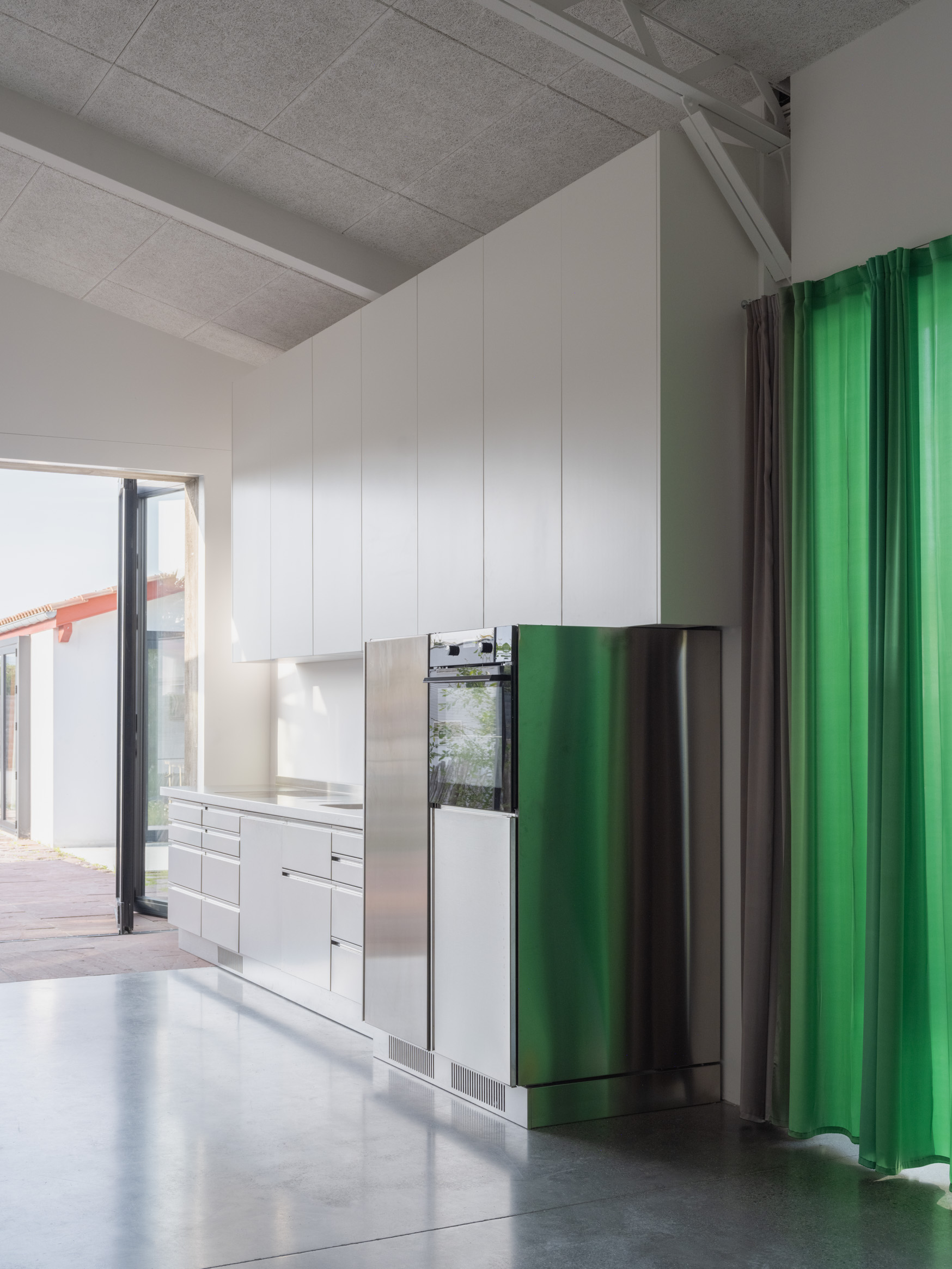
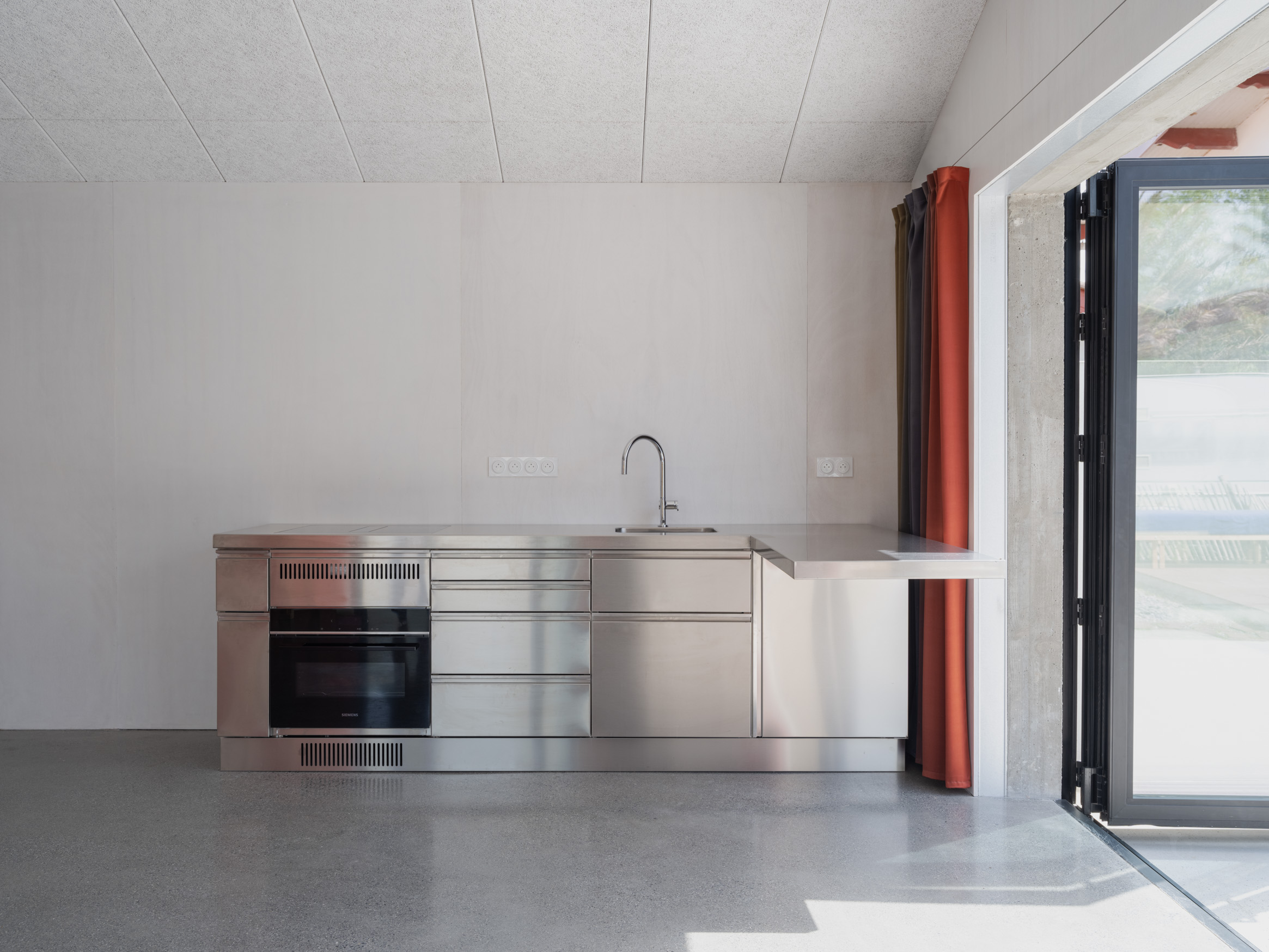
A ramp made of red Rhune stone — locally quarried — slides from the outside into the kitchen. The kitchen becomes a gallery. Everyday life and exhibition occupy the same ground. The same red stone continues its movement to connect the two buildings, its vivid mineral tone contrasting with the green of the lawn.
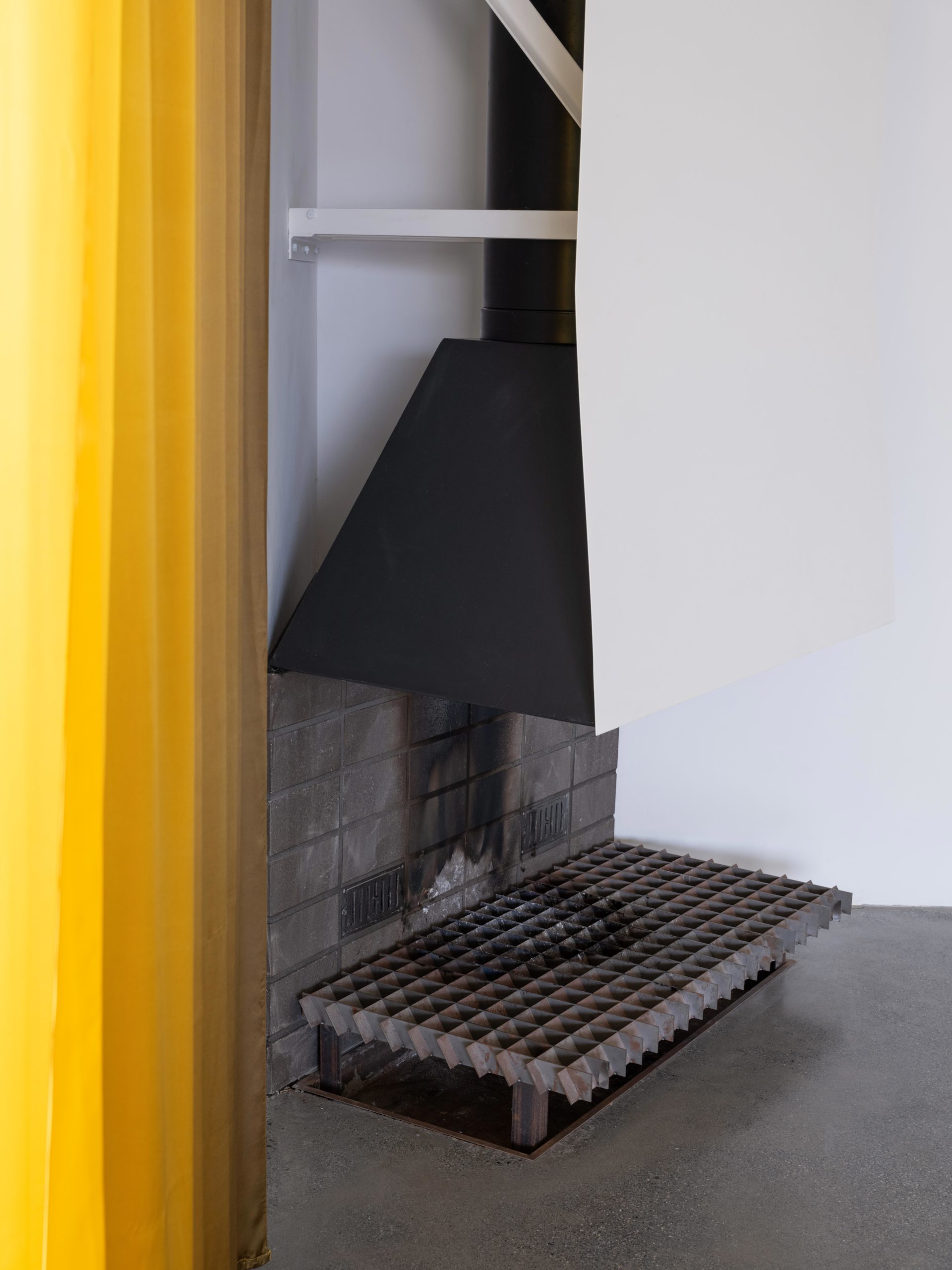
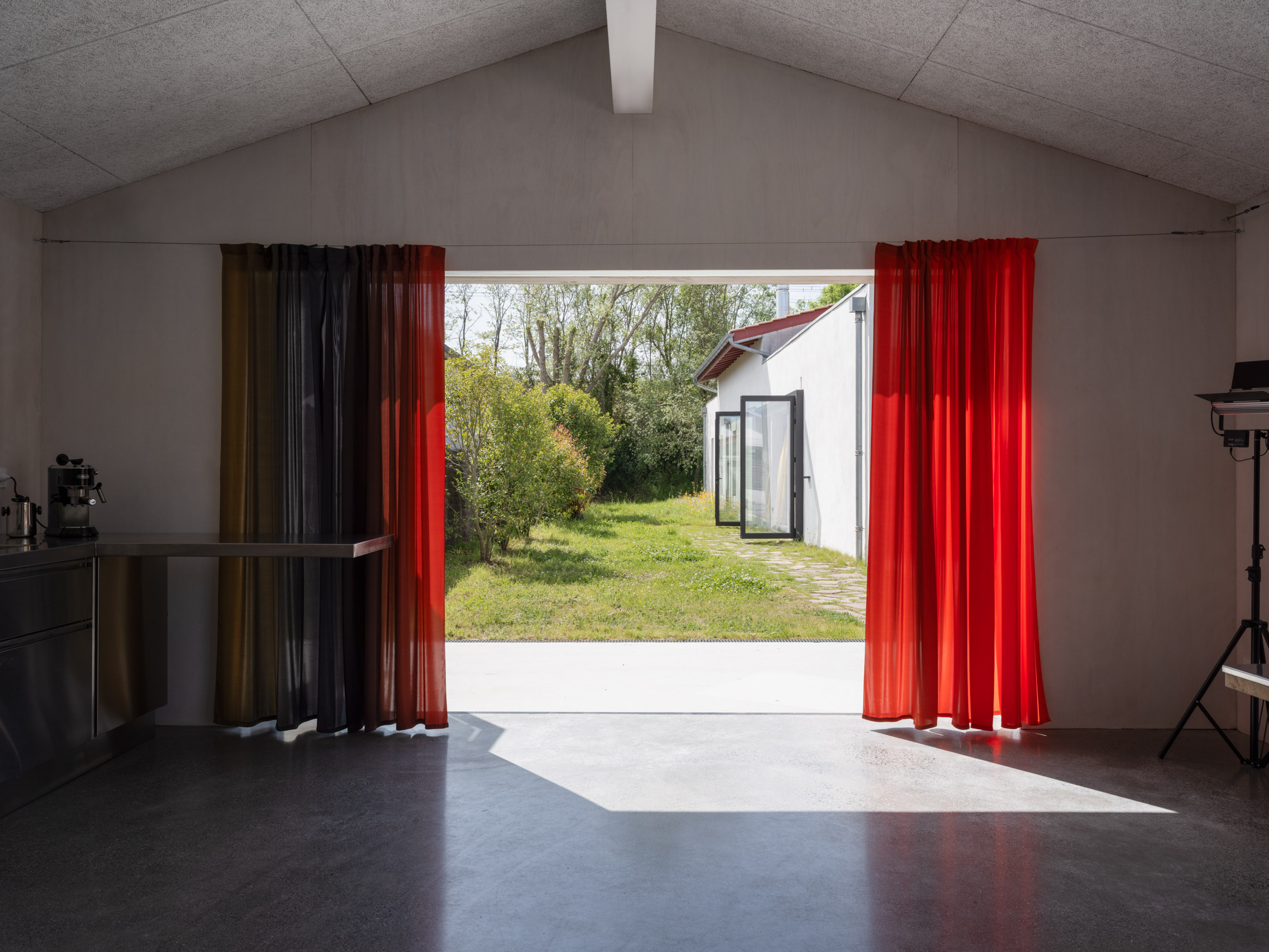
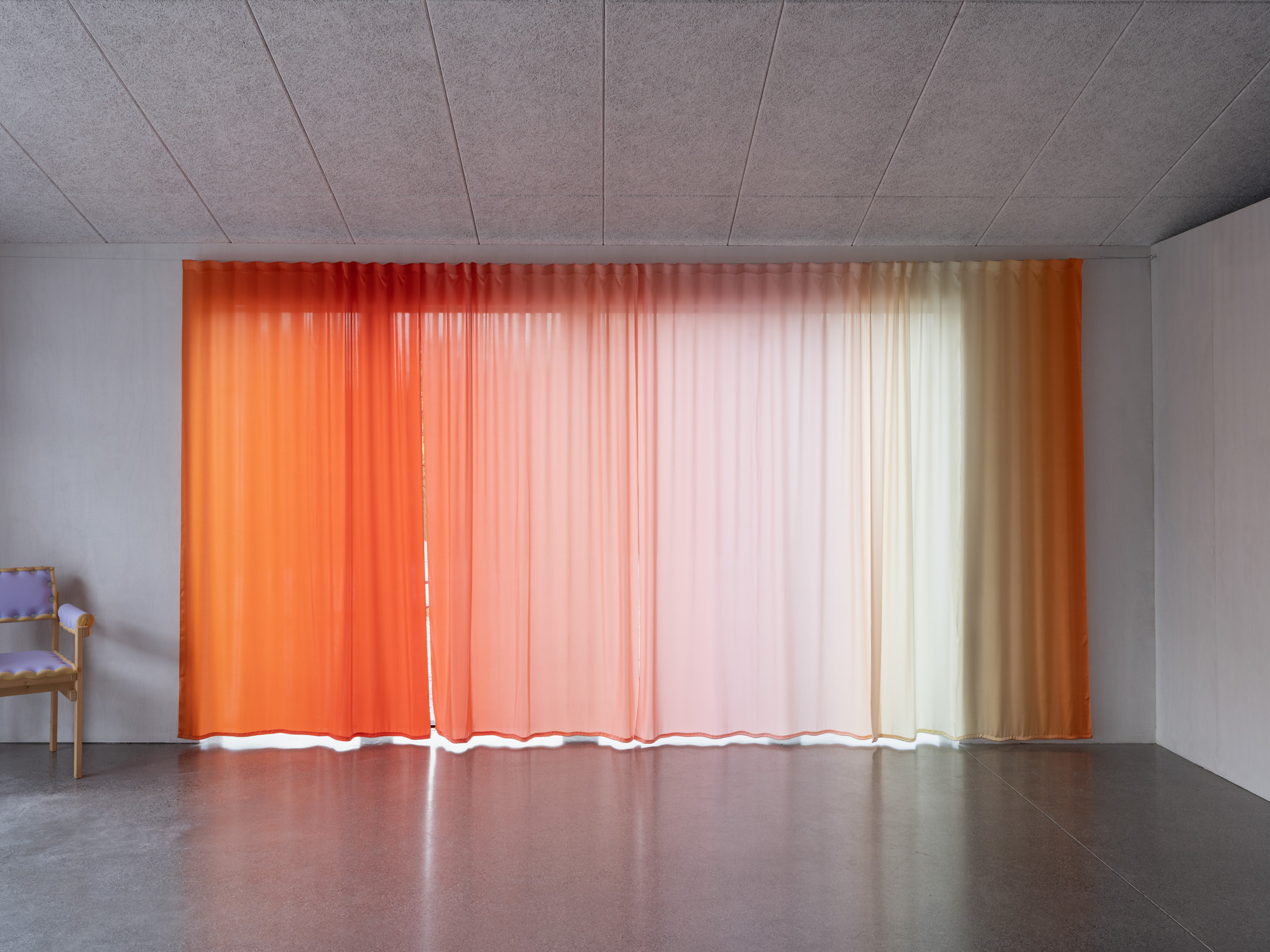
Inside, large silk curtains designed by the artist Johannes Gees are suspended from tensioned metal cables that cross the rooms. The curtains are composed of a gradient of colors divided into four parts. They act as filters rather than partitions: modulating the views between the two buildings that face each other and changing according to how the sunlight strikes them.
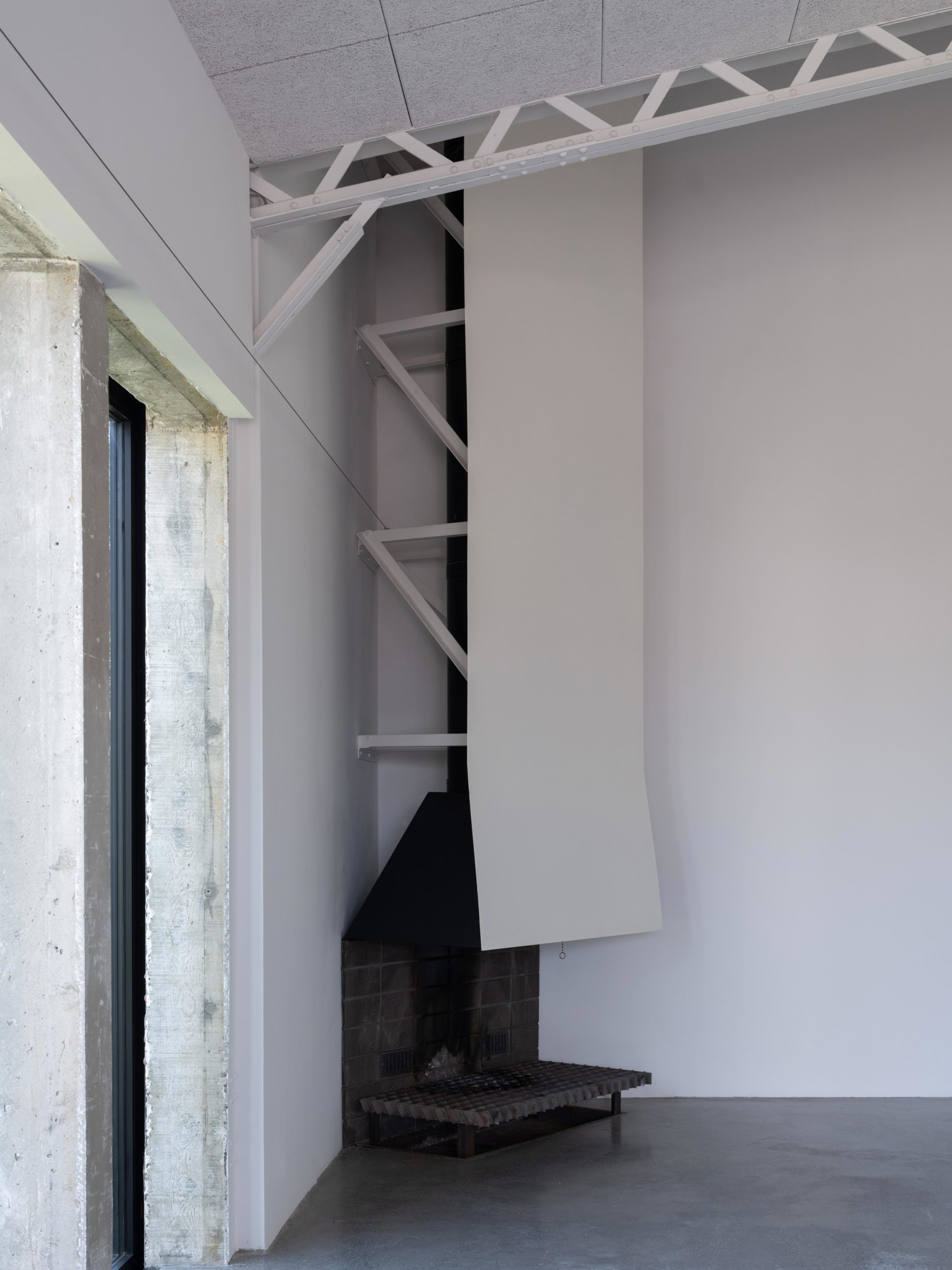
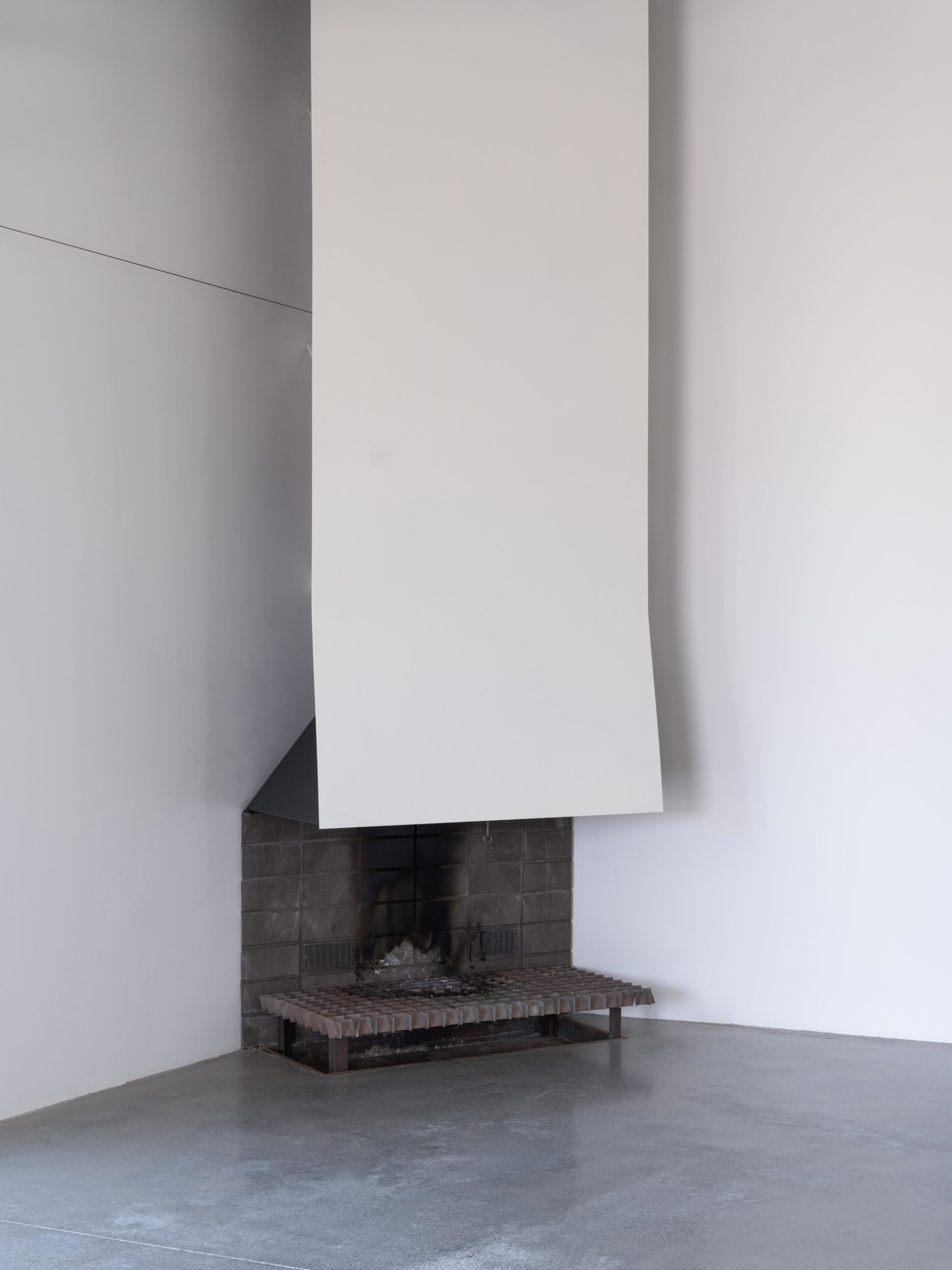
The fireplace is treated as an autonomous object. A minimal composition: a suspended 4 mm steel panel painted white, a wall of refractory brick, and a massive steel grate. Three elements assembled to produce a thermal and spatial center.
Twinhouse does not attempt to erase the history of the place. It makes it legible. Architecture becomes a form of montage: what existed, what is added, and the unforeseen space that appears between the two.